
The 6 Patterns Behind Every $487K+ Condo Capital Gain
Even the Owners Didn't Know Were Making the Difference
Your condo has to fit your family and one day sell for more than you paid. The sales gallery shows you the first part.
Nobody there tells you whether someone will pay more for it when you sell.
Ten years working at SGX and Crypto.com taught me to check who would pay more for something before I buy it.
The 6 Patterns Behind Every $487K+ Condo Capital Gain
Even the Owners Didn't Know Were Making the Difference
Your condo has to fit your family and one day sell for more than you paid. The sales gallery shows you the first part.
Nobody there tells you whether someone will pay more for it when you sell.
Ten years working at SGX and Crypto.com taught me to check who would pay more for something before I buy it.
My friend and I each bought a brand-new condo a year apart. Only one of us made money.

My friend and me
If you've walked through a sales gallery this year, you probably know the thought.
The psf looks crazy, and at the back of your mind you're wondering who would ever pay you even more than this when you sell.
Nobody in the room answers that, because answering it honestly might cost them the sale.
Let me show you what that silence costs.
In 2016 a close friend of mine bought a 1-bedder at Robin Suites for $1.07M.
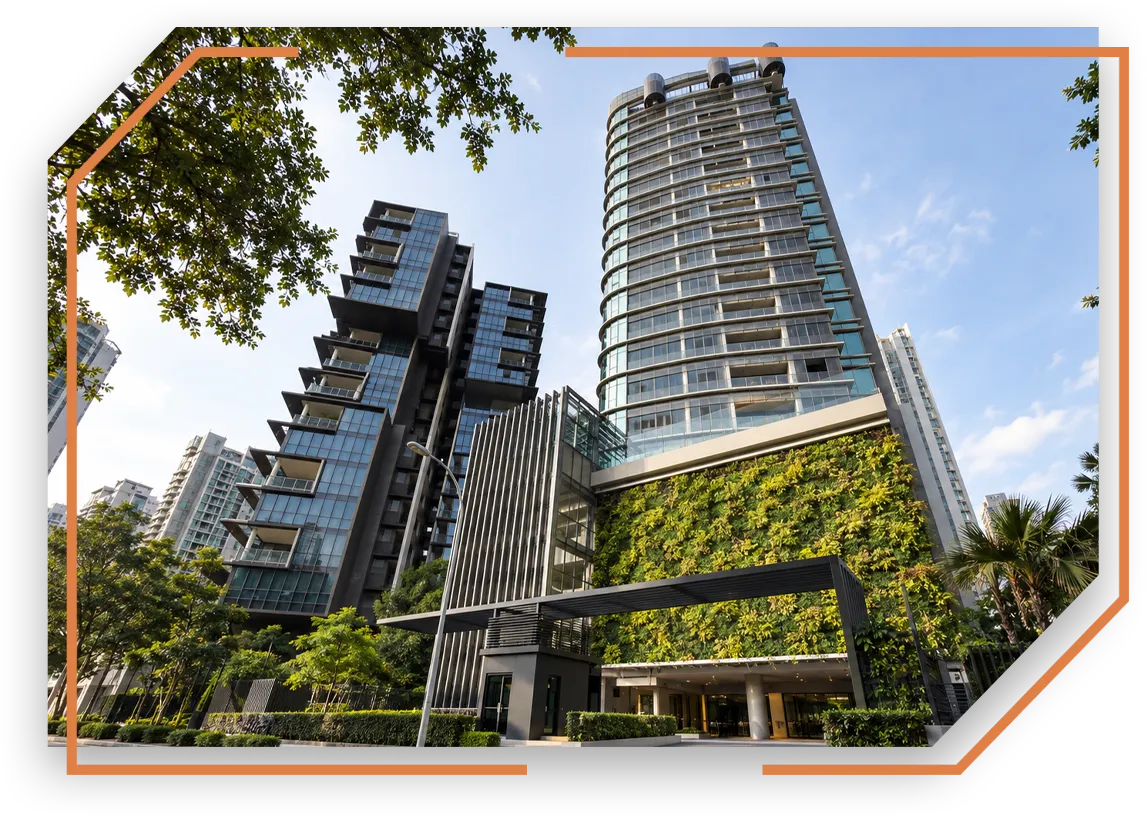
Robin Suites
It was freehold, brand new and a few minutes from Stevens MRT, and he did everything a careful first-time buyer is supposed to do.
A year later my wife and I bought a 3-bedder at Seaside Residences for about $1.6M.
Our budget was meant to stop at $1.4M, and we stretched because we told ourselves our salaries would grow into it.
I'd love to tell you we ran the numbers.
Honestly, we didn't. I was still working in tech, and I didn't even know which numbers to run.
We bought it because I grew up in the East and liked how the project looked. The MRT station nearby was still only a plan.
It had the rooms we'd need if we started a family, and that was as far as the thinking went.

My wife and me!
What I remember is the fear.
Our wedding was the next year, and we weren't sure there'd be money left for it. The worst case we said out loud was selling at a loss and moving back in with our parents.
By 2022 the market had run hot after COVID, and my friend and I both decided to sell.
Our second child had just arrived, and a 3-bedder that felt huge when I was 27 y/o was about to feel small.
We had no next home lined up when we decided
We sold for about $2.38M, around $780K in capital gains, and every dollar went into the deposit on the home we live in now.
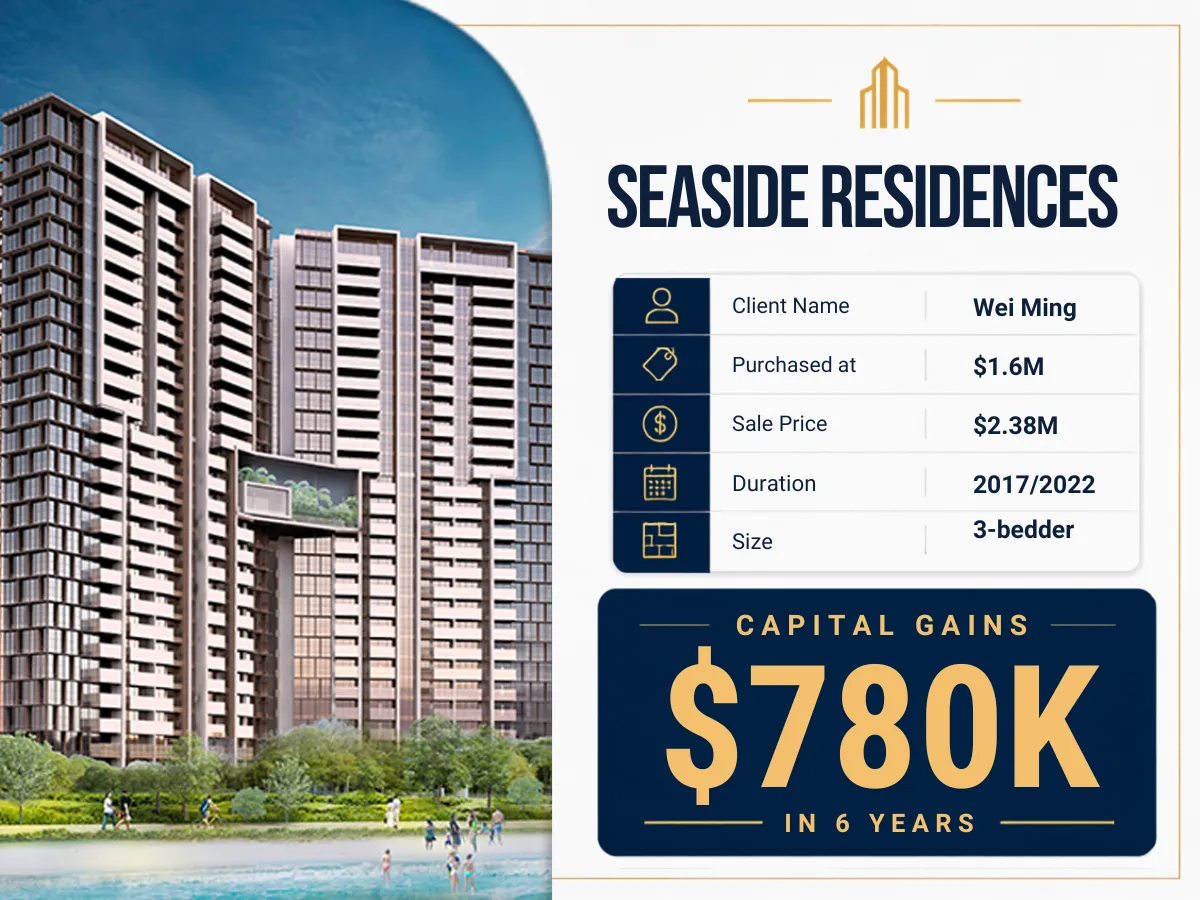
I sold my condo for $780K gains
My friend couldn't get one offer above what he paid.
After months of trying, he finally sold his unit go at $988K...
An $82K loss, in the strongest market Singapore had seen in years.
Here's the part that should bother you:
On paper, his was the safer buy on the day we each signed.
It was freehold while mine was 99-year, and his MRT station was already running while mine was still a plan.
So why did the safer-looking unit lose money in a bull market?
The Singapore property market finally feels calm.
The property market feels calmer than it has in years.
Interest rates down. Prices softening. No panic, no frenzy, no cooling measures looming.
For most buyers, this feels like good news. Breathing room.
Time to think.
But here's something that doesn't get talked about enough:
Calm markets don't reduce the gap between winners and losers. They widen it.
When the market is chaotic, buyers are forced to be careful.
They triple-check everything.
They hesitate before committing.
When the market feels stable?
Complacency sets in.
Buyers start thinking 'the market is calm, so anything I buy should be fine.'
They stop doing the hard analysis.
And five years later, they're wondering why their property barely moved while someone else's appreciated by $400,000.
I could tell you everything I liked about my unit. I couldn't tell you why it made money.

I'm Wei Ming.
Before I got my property licence I spent about ten years in tech and markets, at the Singapore Exchange (SGX), then GovTech, then four years as a product manager at Crypto.com.
Those jobs left me with one habit, and it's why my friend's loss stuck with me longer than my own gain did.
At SGX you see both sides of every trade, so you learn not to trust a price until someone has actually paid it.
Then working at Crypto.com as a Product Manager, I watched coins with big names and huge communities go to zero in an afternoon.
Nobody had asked who would still be there to buy when everyone wanted to sell.
Real estate in Singapore does the same thing.
It just takes six years instead of six hours, so by the time owners sell, everyone has forgotten to ask who the buyer will be.
Here's why that question matters more than any other.
A condo makes you money in exactly one way: someone pays you more for it than you paid.
If that person never shows up, the freehold title, the MRT and the nice finishes are worth nothing to you, because there is no gain to collect.
My friend's unit had everything going for it on launch day.
What it never had was a buyer waiting at the other end...
... And nothing he was shown before he bought, would have told him that.
If that person never shows up, the freehold title, the MRT and the nice finishes are worth nothing extra at the end, because there is no gain to collect.
My friend's unit had everything going for it on launch day.
What it never had was a buyer waiting at the other end,
Mine did have that buyer.
But before I became a real estate strategist, all I could name was what I'd liked about it.
Where I used to work, a result you can't explain is a result you can't repeat.
That's what sent me looking.
What 17 years of condo sales taught me about why some condos sell at a profit and others don't
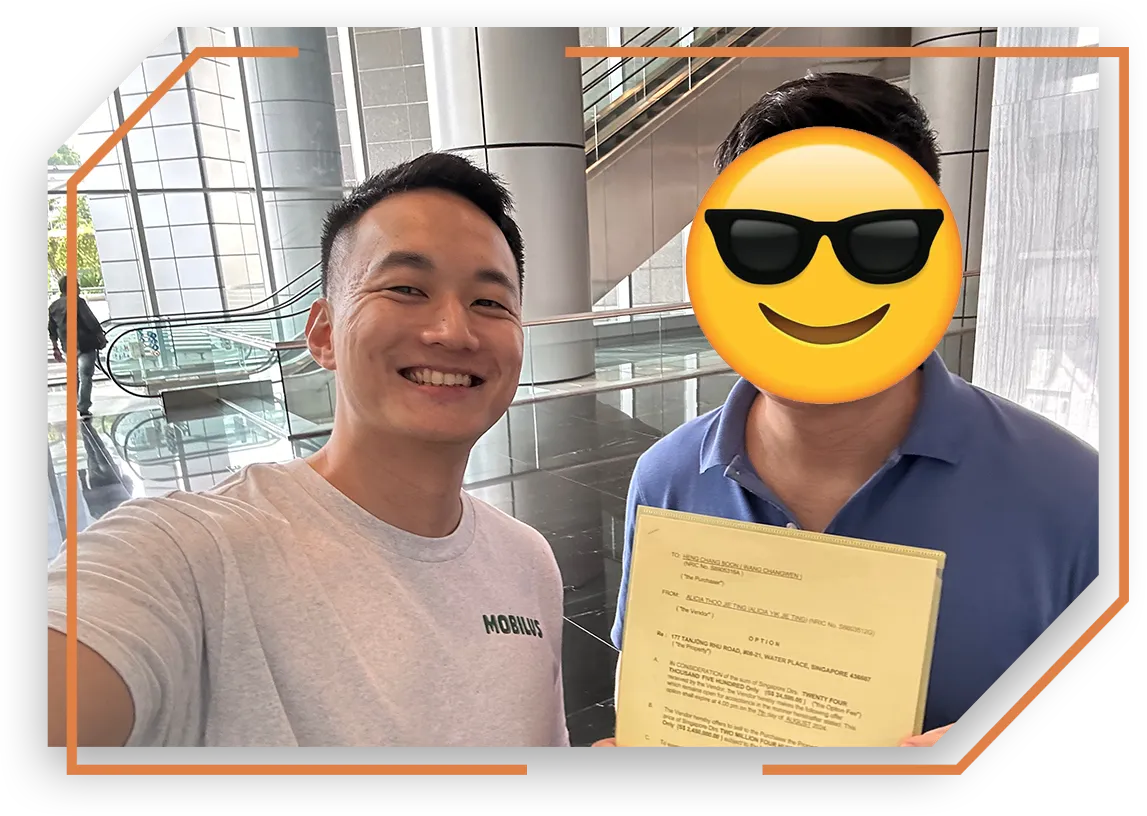
Comparing my sale with my friend's could only tell me what happened to the two of us.
So I went to the records.
Singapore logs every private home sale, and I pulled 17 years of them, from the recovery after the 2008 crisis to today.
I read those sales the way I learned to at SGX, starting from the buyer's side.
For every boom and every correction, I looked at which units sold at a profit and which lost money, however good they looked on launch day.
The things most buyers check first didn't decide it.
Plenty of units that were near an MRT, brand new, freehold and in a nice area still lost money.
What decided it was whether a buyer was ready to pay more on the day the owner needed to sell.
When that buyer was there, owners could sell at a profit in an ordinary month.
My friend had no such buyer, and he lost $82K in the strongest market in years.
Six things predict whether that buyer will show up, and you can check every one of them before you sign.
My Seaside unit passed all six, and my friend's Robin Suites unit passed none.
I call these 6 checks the Next Buyer Test, because each one is about the person who buys your unit from you.
The test always comes second. The first thing I ask any couple is whether a home fits their family.
Once we know which homes do, the six show us which of them will also pay for the next one.
Here's each one in brief, and the report has the full check behind it.
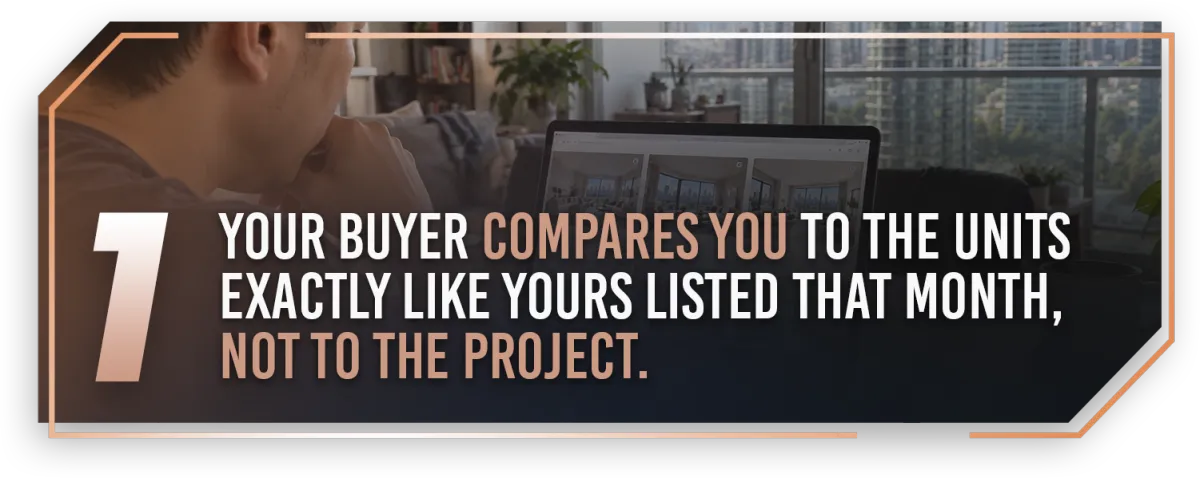
When I sold at Seaside, mine was one of only two 3-bedders for sale in an 843-unit project, so my buyer had nowhere else to go.
Give that same buyer 20 similar listings and they have 19 reasons to ask for 5% off, which on a $2.2M unit is $110K.
That's a full renovation on your next home.
Whether it comes out of your sale price or your savings depends on the unit you pick today.

A family outgrowing their place, a school year starting, a baby on the way.
On the day you sign, your unit type and location decide whether your unit attracts that buyer or a bargain hunter.
One of my clients sold his Penrose 3-bedder in 2026 to a family who needed the extra room, just like his family once did.
He made about $800K in capital gains.

Banks decide how much to lend based on recent sales of similar units.
when a project rarely has sales, the bank has little to go on and often values the unit lower.
Your buyer may want to pay your price, and the bank may not let them.
A couple I worked with sold their boutique unit in Balestier for around $200K in capital gains, before the lack of sales started holding its price back.
The same unit still sells at about the price they let it go for.
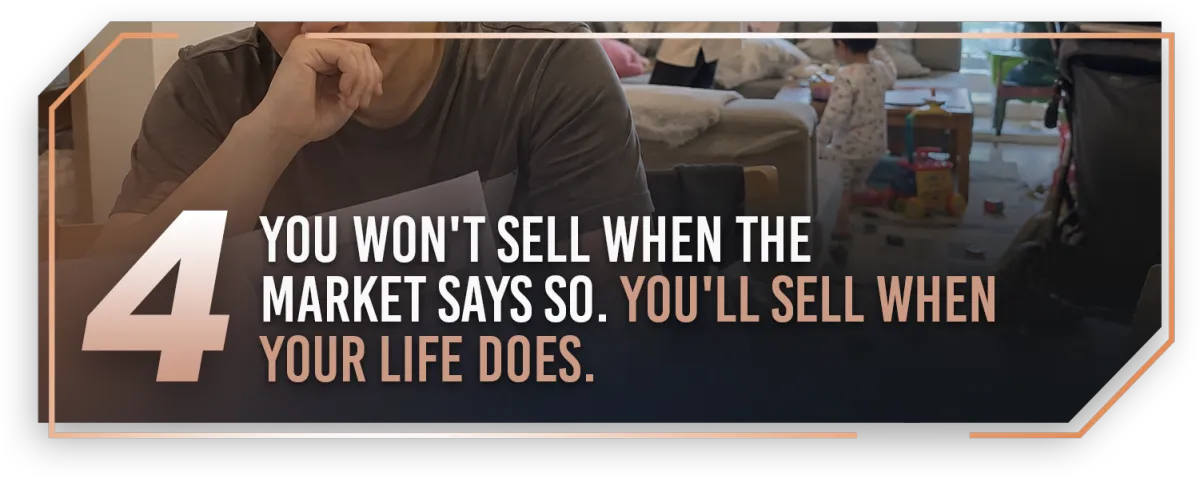
One client sold in 2024 to move near his parents, another sold in 2023 for a primary school, and I sold because we'd gone from 3 people to 4.
The first client made around $600K in capital gains, the second around $500K, and I made about $780K.
None of us sold at the top of the market.
Your family sets the sale date, so the unit has to have a buyer waiting in an ordinary month, not just at the top of the market.

A project with 10 units for sale can have 80 within a few months, and a buyer with 80 choices can push your price down.
Before you sign, the number of each unit type in the project already tells you how crowded that day will be.
A family I advised sold their 3-bedder before key collection, while very few 3-bedders were for sale...
...and made around $500K in capital gains.
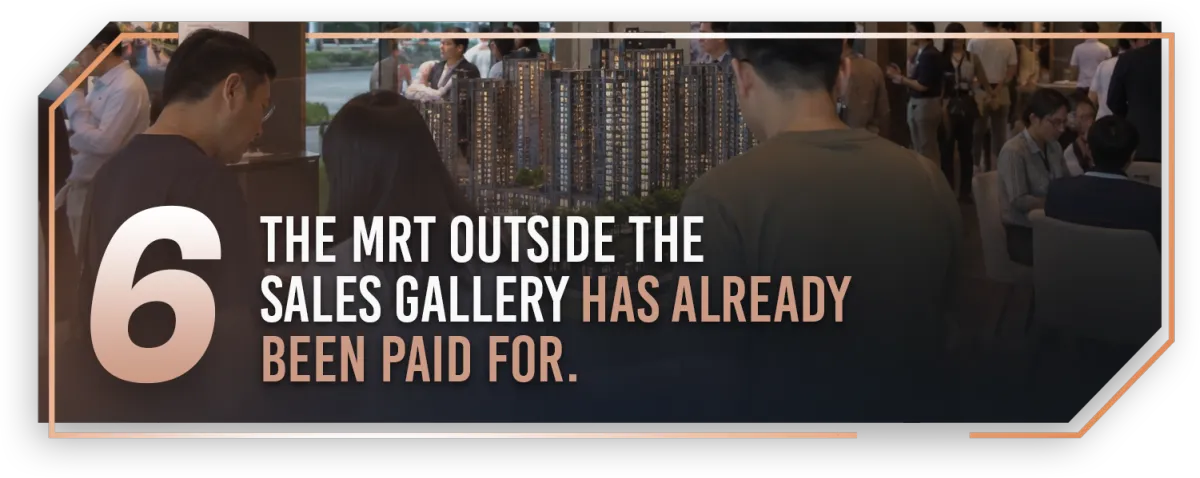
Anything already built near the condo is already in your price.
The profit from it went to whoever bought before it existed.
Seaside launched with its MRT still a plan, and by the time I sold, buyers were paying extra for the new station.
Robin Suites launched with everything already there, and there was not much left for my friend's buyer to pay extra for.
In the report, each pattern comes with the public source to check and the number to look for. Most take about 10 minutes.
The numbers behind this page

The families I've helped
The results the insights in this report have helped families get:
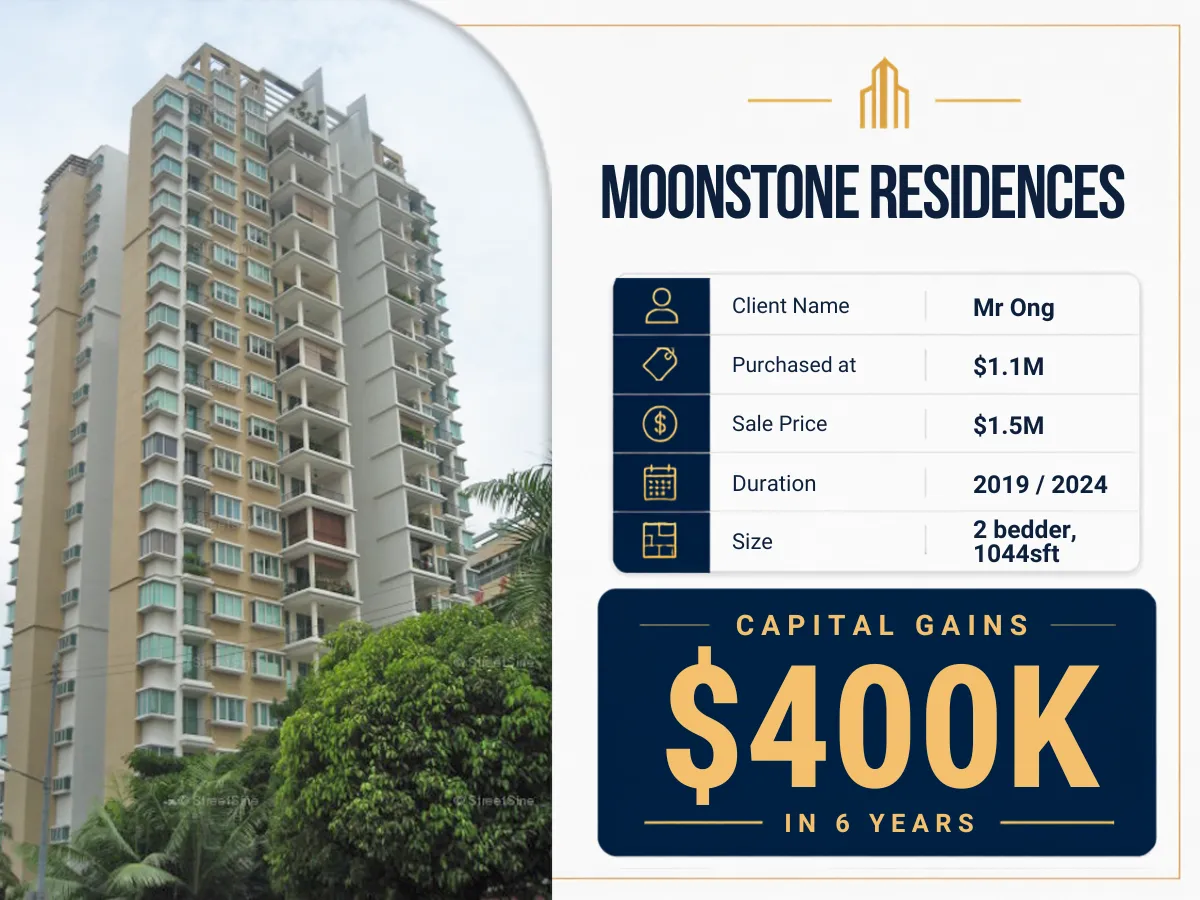
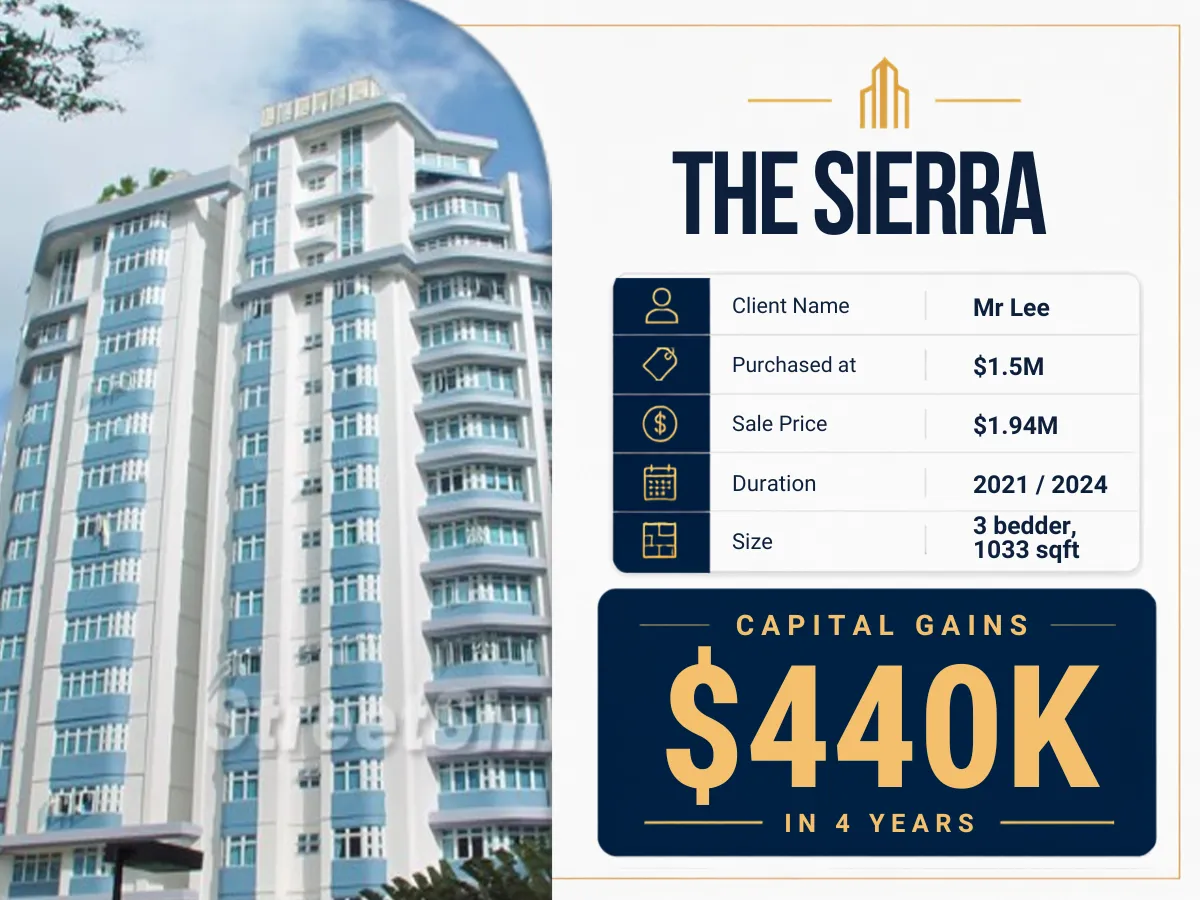
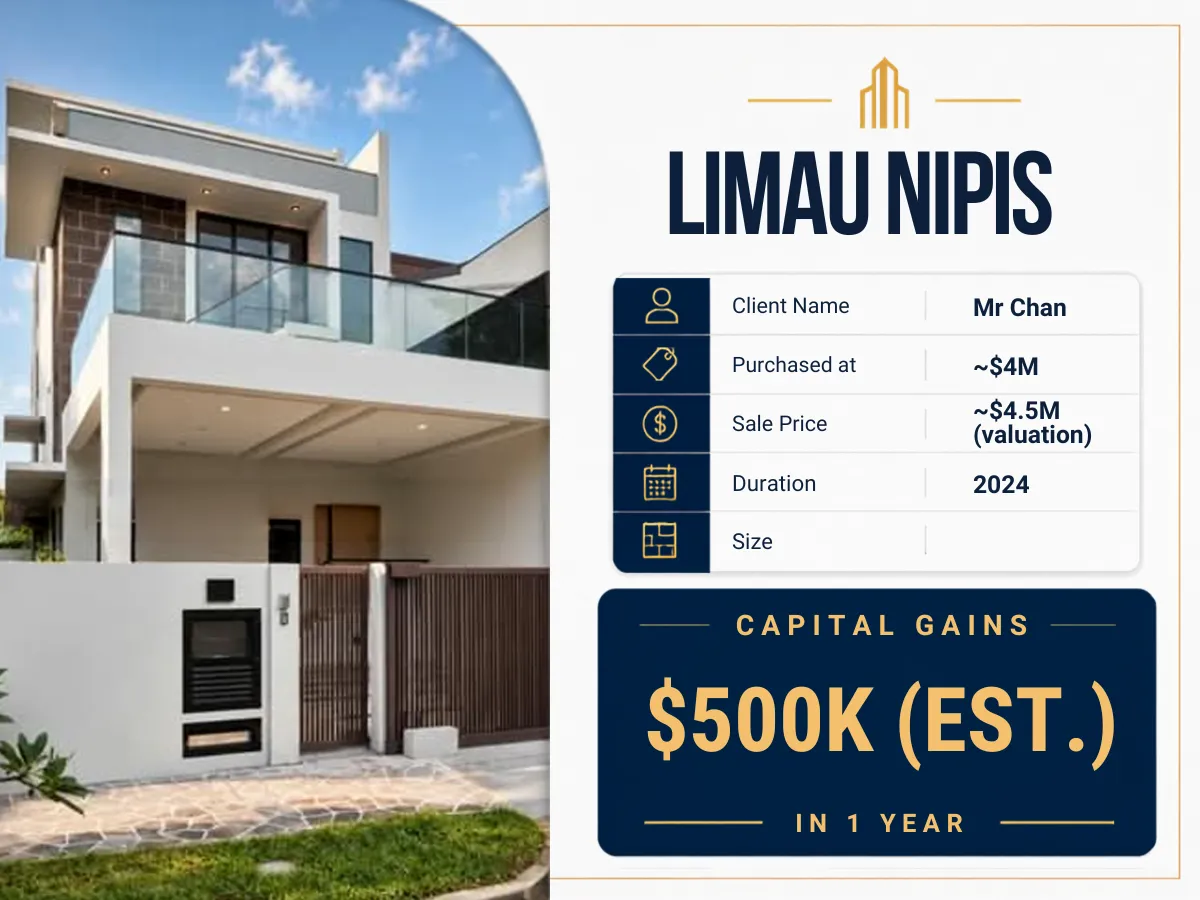
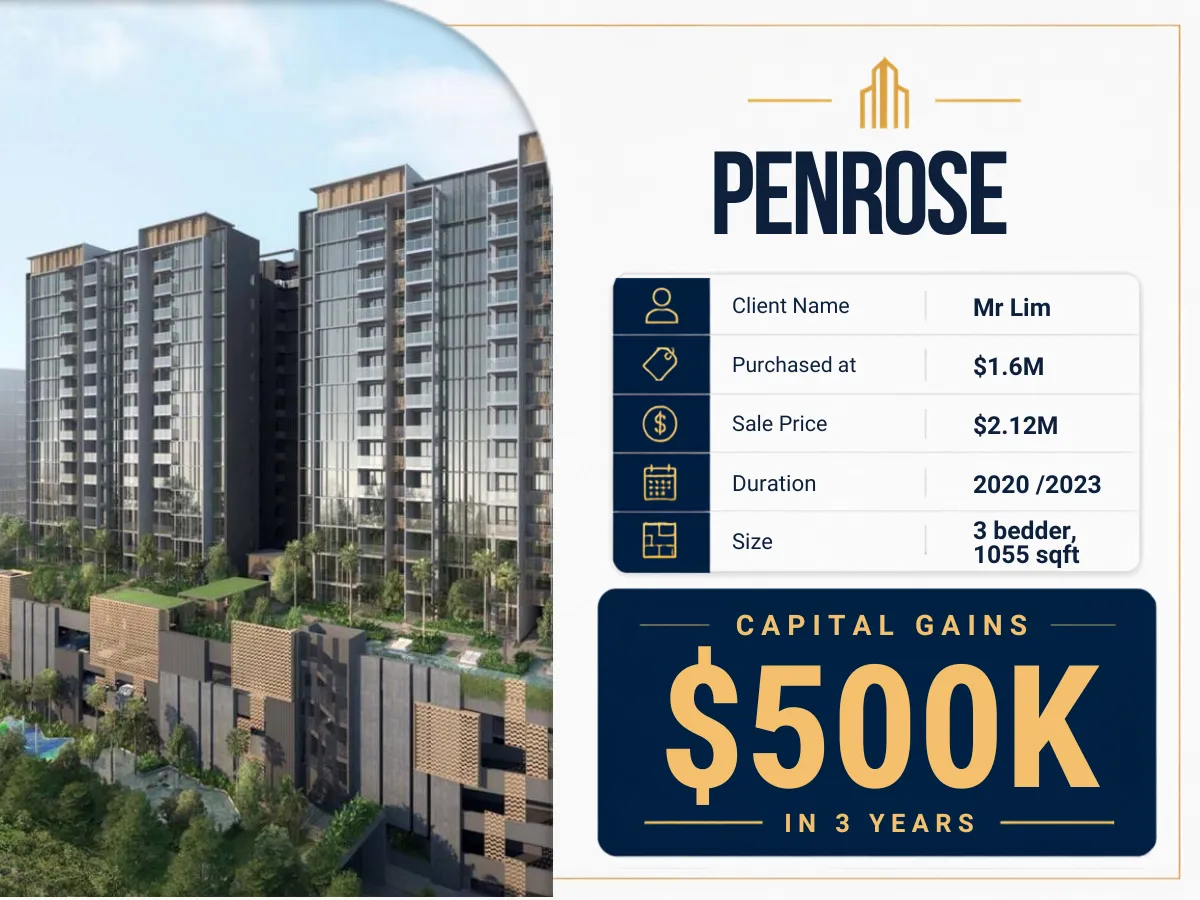
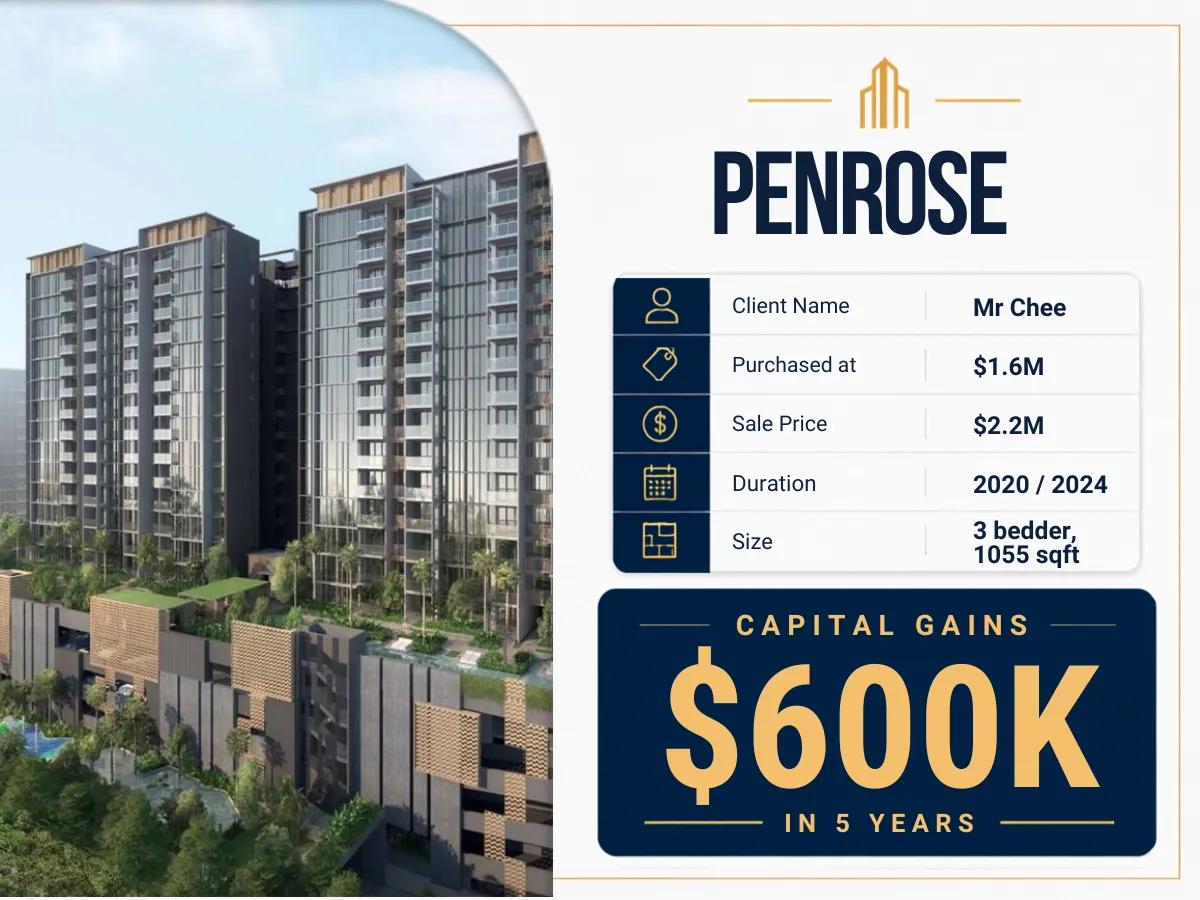
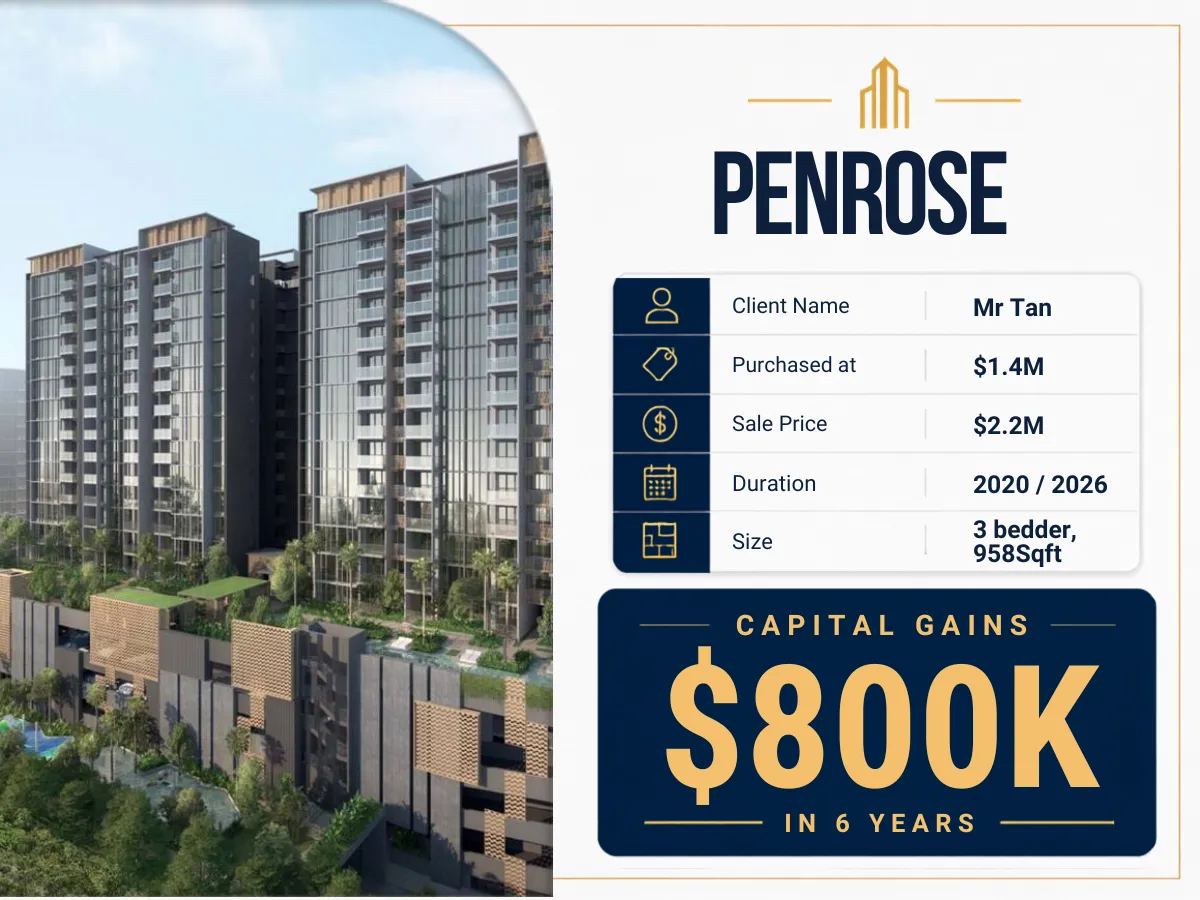
Seventeen families, about $46M transacted, and PropNex's Top Rookie award in my first year.
Why I hold my own money to this standard

My daughter is 7 and my son is 4.
Most nights one of them ends up in our bed, and somehow a 4-year-old can squeeze a grown man into about 20% of his own mattress.
It's uncomfortable, and I sometimes catch myself thinking that one night will be the last time, and I won't know it.
That thought changed how I look at money more than any job did.
Before the kids, a property decision was about my wife and me for the next few years.
Now my two kids will live with every decision I make for the next twenty.
At the very least, I never want their education to suffer because I chose a condo nobody wanted to buy when we needed to sell.
If I can help each of them into a first home one day, I will.
That's the standard I hold my own family's money to, and nobody at a sales gallery is paid to hold yours to it.
This report holds your money to that same standard.
Two families who changed their decision because of the test

When a family sits down with me, the first conversation is never about the unit.
It's about the life:
Whether more kids are coming, which school, how many years they'll stay and how willing they are to move again.
Only then do I run the six patterns.
A home has to fit the family first and pay for the next home second, and most buyers only ever hear about the first part.
Here's what that looked like for two couples who came to me the way you might.
The couple who sold a home they loved, two years early
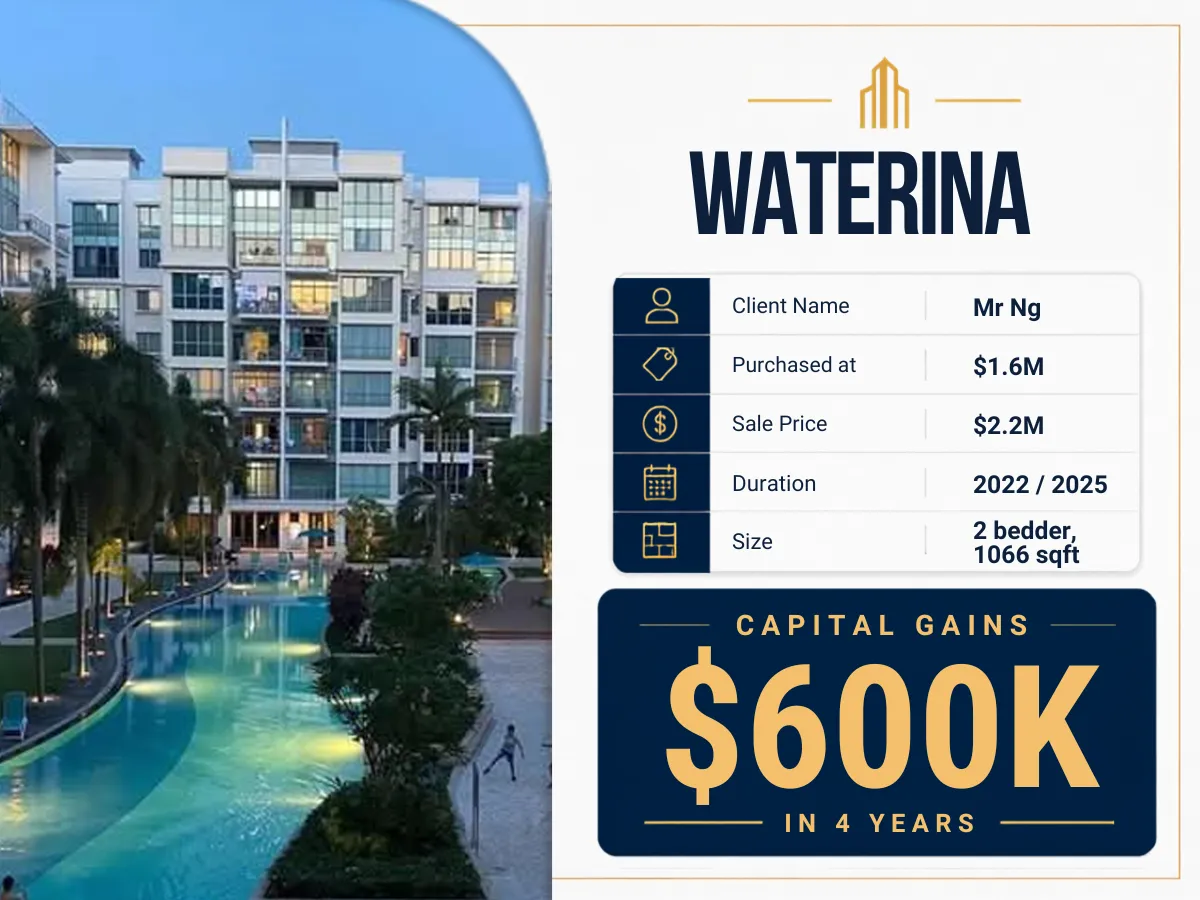
A couple in banking owned a freehold 2-bedder at Waterina that they'd bought in 2022 for about $1.65M.
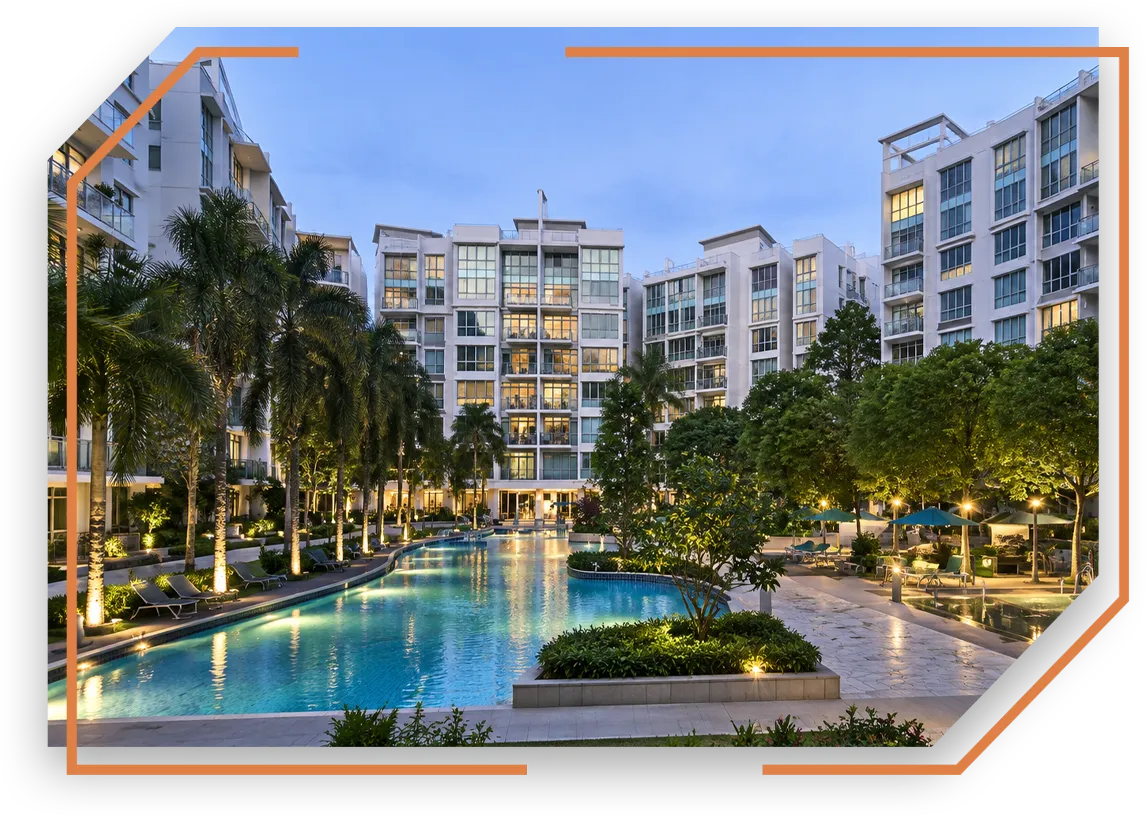
Waterina
They'd renovated it beautifully, they liked the neighbourhood, and there was no reason to move.
What had changed was everything around the home.
Their incomes had climbed, their savings had grown, and they wanted to plan for kids.
They asked me whether the 2-bedder was still a good property.
It was. The project was solid and the price they'd paid was fair.
What worried me was their timeline.
So I asked them a different question:
What would their family look like in five years, and would a 2-bedder still fit?
👉The first answer was simple: a baby would make a 2-bedder too small within a few years, whatever the market was doing.
👉 The second thing I checked was the market, and that was the interesting part:
very few 2-bedders were for sale in their project right then, and buyers looking for one were paying top price.
So I laid out both routes with the numbers.
They could sell now, while buyers for a 2-bedder were paying top price, or sell in 2 years when the baby forced the move and take whatever the market offered that month.
They chose to sell now.
The unit sold in 2025 for about $2.25M, the highest psf the project had ever seen.
That's around $600K in capital gains, cashed out.
That money became their landed home the same year, with room for the children they were planning.
Our own home, checked before we signed
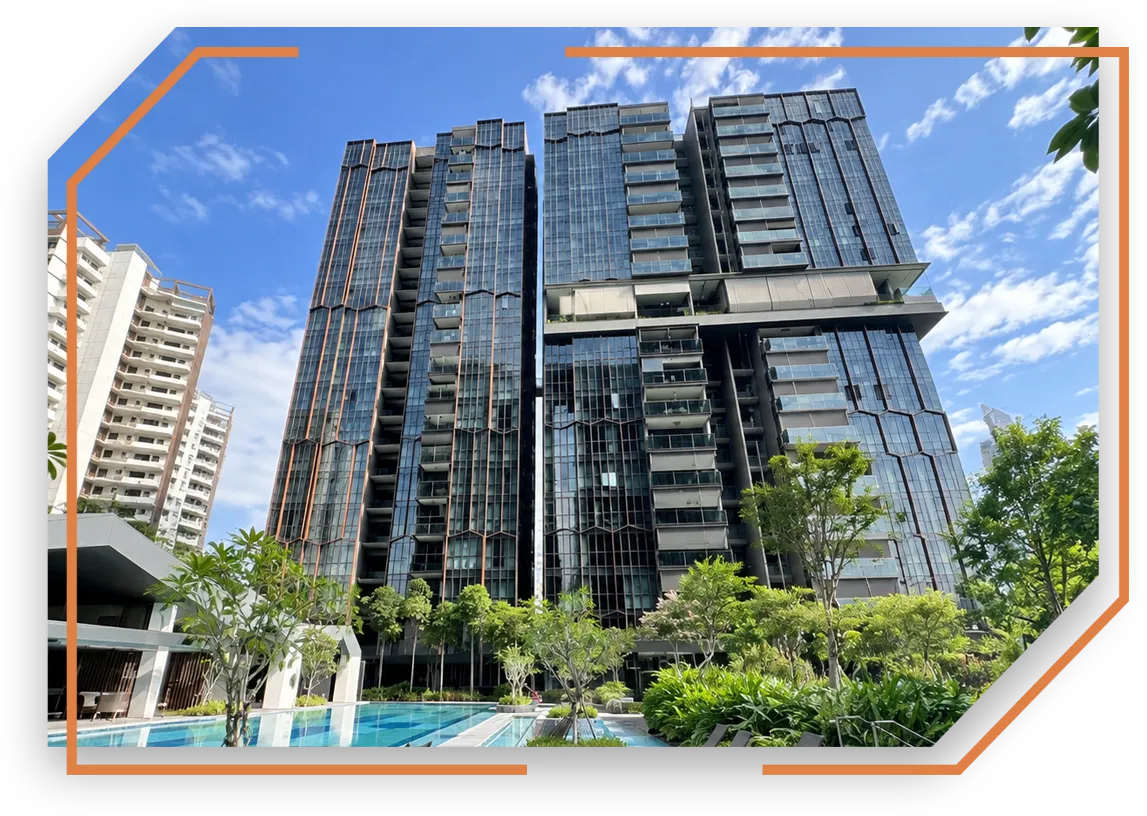
Liv @ MB
Our current home at Liv @ MB is the first property I bought with all six checked before I signed. Like every family I work with, we started with our life, not the unit.
We started with the life, not the unit.

The shortlist began with my daughter's school and the number of rooms two growing kids would need, and only then did we look at prices.
We had a budget of $3.8M to $4M and two units in front of us.
One was within budget but faced another block.
The other was about $300K over, on a high floor, with an unblocked view over landed homes and no afternoon sun.
Before we talked price, I asked the one question all six patterns boil down to:
When someone is scrolling listings in 2030, which of these two does he stop on?
At every viewing we ever hosted at Seaside, the view was what stopped people, and it had stopped my wife and me the same way.
So we paid the extra $300K on purpose. We knew the trade-off: a premium unit takes longer to sell, because fewer buyers can afford the view.
We plan to stay until both kids finish primary school, so we were fine with that, and we wrote the trade-off down before we signed.
The Next Buyer Test, for the condo you're looking at
Everything the developer's agent hands you is about what the unit has.
None of it tells you who will buy the unit from you next, and that person decides whether you make money.
This report shows you how to run the six patterns on any condo you're considering, new launch or resale, down to the exact unit.
You'll see which patterns work for that unit, which work against it, and how that could change your sale price on the day your family needs to sell.
Run it on your shortlist this week, and walk into the resale viewing or sales gallery knowing the one thing nobody there will tell you.
What the report can't tell you is whether the unit fits your family for the years you'll live in it.
That needs a conversation, and I'm happy to have it with any reader who wants to talk.
Who this report is for

You're planning to buy a condo in the next year or so.
Maybe it's your first, after an HDB flat or a BTO ballot that didn't land. Or your family has outgrown your current place, and you need something bigger.
You want what every family I've worked with wanted: a home that fits the life you're about to have, and one that's worth more when it's time to move on.
The sales gallery is built to show you the first part, and nobody there will talk about the second.
If you're upgrading from an HDB flat, you should know my story starts in one.
My parents bought one flat, raised us in it, and are still there thirty years later.
They never had the money to upgrade, and I don't think they got anything wrong.
The stability they gave us is why I can plan twenty years ahead today.
So before you take the step they couldn't, you deserve to know who will buy your condo from you.
If you just want someone to tell you which launch to buy this weekend, this report isn't for you.
Get the report
P.S. Every sales gallery answers the same question: what does this unit have? The question that decides whether you make money is who buys it from you, and nobody in that room is going to answer it.
This report does, for the condo you're looking at right now.
Copyright 2026. All Rights Reserved.